
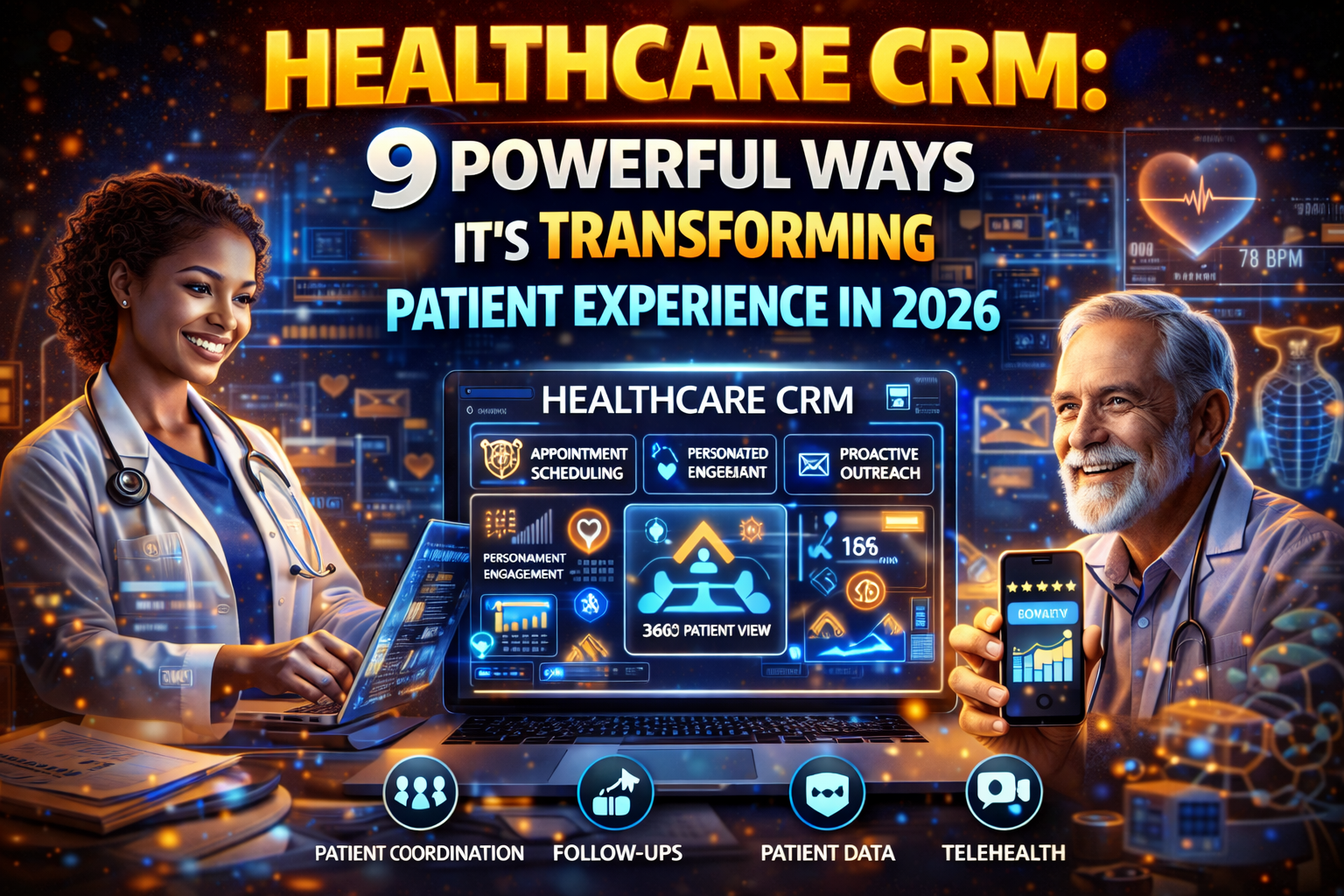
Discover how Healthcare CRM is transforming patient experience through personalization, automation, and data-driven care. Learn key benefits, trends, and tools in 2026.
Table of Contents
Introduction
The healthcare industry is undergoing a massive digital transformation. Patients today expect the same level of convenience, personalization, and responsiveness they receive from other industries like e-commerce or banking.
This shift has led to the rise of Healthcare CRM—a powerful solution designed to manage patient relationships, improve communication, and enhance overall care experiences.
In 2026, Healthcare CRM is no longer just a backend tool. It has become a strategic system that connects patients, providers, and data to deliver seamless, patient-centric experiences.
In this blog, we’ll explore how Healthcare CRM is transforming patient experience globally, along with key benefits, use cases, and future trends.
What is Healthcare CRM?
Healthcare CRM refers to Customer Relationship Management systems specifically designed for healthcare organizations. Instead of managing “customers,” these systems focus on managing patient relationships.
They help healthcare providers:
- Store patient data securely
- Track interactions and medical history
- Automate communication
- Improve engagement and care coordination
👉 Learn more about CRM basics:
https://www.salesforce.com/crm/what-is-crm/
👉 Explore Healthcare CRM solutions:
https://www.salesforce.com/solutions/industries/healthcare/overview/
Why Patient Experience Matters More Than Ever
Modern patients are informed, connected, and expect:
- Easy appointment scheduling
- Fast communication
- Personalized care
- Transparent information
Poor patient experience can lead to:
- Missed appointments
- Low satisfaction
- Reduced trust
👉 Read about patient experience importance:
https://www.mckinsey.com/industries/healthcare/our-insights
Healthcare CRM addresses these challenges by putting patients at the center of care.
9 Ways Healthcare CRM is Transforming Patient Experience
1. Personalized Patient Engagement
Healthcare CRM enables providers to deliver personalized communication based on:
- Medical history
- Preferences
- Past interactions
Examples include:
- Customized health reminders
- Tailored treatment plans
- Personalized wellness tips
Result: Patients feel valued and understood.
2. Seamless Appointment Management
Gone are the days of long waiting times and manual booking.
CRM systems offer:
- Online appointment scheduling
- Automated reminders
- Real-time updates
👉 Learn about digital healthcare tools:
https://www.ibm.com/industries/healthcare
This reduces no-shows and improves efficiency.
3. Omnichannel Communication
Patients interact through multiple channels:
- SMS
- Mobile apps
- Patient portals
Healthcare CRM integrates all these touchpoints, ensuring consistent communication.
👉 Explore omnichannel strategies:
https://www.oracle.com/cx/what-is-omnichannel/
4. Improved Care Coordination
Healthcare involves multiple stakeholders—doctors, nurses, specialists.
CRM systems centralize patient data, enabling:
- Better collaboration
- Faster decision-making
- Reduced errors
5. Data-Driven Insights for Better Care
Healthcare CRM uses analytics to provide insights such as:
- Patient behavior patterns
- Treatment outcomes
- Risk factors
👉 Learn about healthcare analytics:
https://www.healthit.gov/topic/health-it-basics
This helps providers make informed decisions.
6. Automated Follow-Ups and Reminders
CRM systems automate:
- Medication reminders
- Post-treatment follow-ups
- Preventive care alerts
Impact: Improved adherence and better health outcomes.
7. Enhanced Patient Support
With integrated support systems, Healthcare CRM enables:
- Faster response times
- AI-powered chatbots
- 24/7 assistance
👉 Learn about AI in healthcare:
https://www.who.int/news-room/questions-and-answers/item/artificial-intelligence-in-health
8. Patient Feedback and Satisfaction Tracking
Healthcare CRM collects and analyzes patient feedback through:
- Surveys
- Reviews
- Ratings
This helps organizations:
- Identify issues
- Improve services
- Enhance satisfaction
9. Secure and Compliant Data Management
Data security is critical in healthcare.
CRM systems ensure:
- Secure data storage
- Compliance with regulations
- Controlled access
👉 Learn about data privacy in healthcare:
https://gdpr.eu/what-is-gdpr/
Key Benefits of Healthcare CRM
1. Better Patient Experience
Personalized and seamless interactions.
2. Increased Operational Efficiency
Automation reduces manual workload.
3. Improved Patient Retention
Satisfied patients are more likely to return.
4. Enhanced Communication
Clear and consistent engagement.
5. Data-Driven Healthcare
Better decisions through insights.
Challenges of Implementing Healthcare CRM
1. Data Privacy Concerns
Handling sensitive patient data requires strict compliance.
2. Integration Complexity
Connecting CRM with existing healthcare systems can be challenging.
3. Cost of Implementation
Advanced solutions may require investment.
4. Staff Training
Healthcare professionals need training to use CRM effectively.
Future Trends in Healthcare CRM
The future of Healthcare CRM is exciting and rapidly evolving:
1. AI-Powered Predictive Care
Predicting diseases and health risks before they occur.
2. Telehealth Integration
Seamless integration with virtual consultations.
3. Wearable Device Integration
Real-time health monitoring through IoT devices.
4. Hyper-Personalized Treatment
Customized care based on patient data and genetics.
Conclusion
Healthcare is no longer just about treatment—it’s about experience.
Healthcare CRM is transforming how providers interact with patients by making care more personalized, efficient, and data-driven.
By leveraging CRM systems, healthcare organizations can:
- Improve patient satisfaction
- Enhance care delivery
- Build long-term trust
In 2026 and beyond, the focus will continue shifting toward patient-centric care—and Healthcare CRM will be at the heart of this transformation.
Discover how Autonomous CRM Systems are transforming businesses with AI-driven automation, predictive insights, and self-operating customer management strategies in 2026.
