
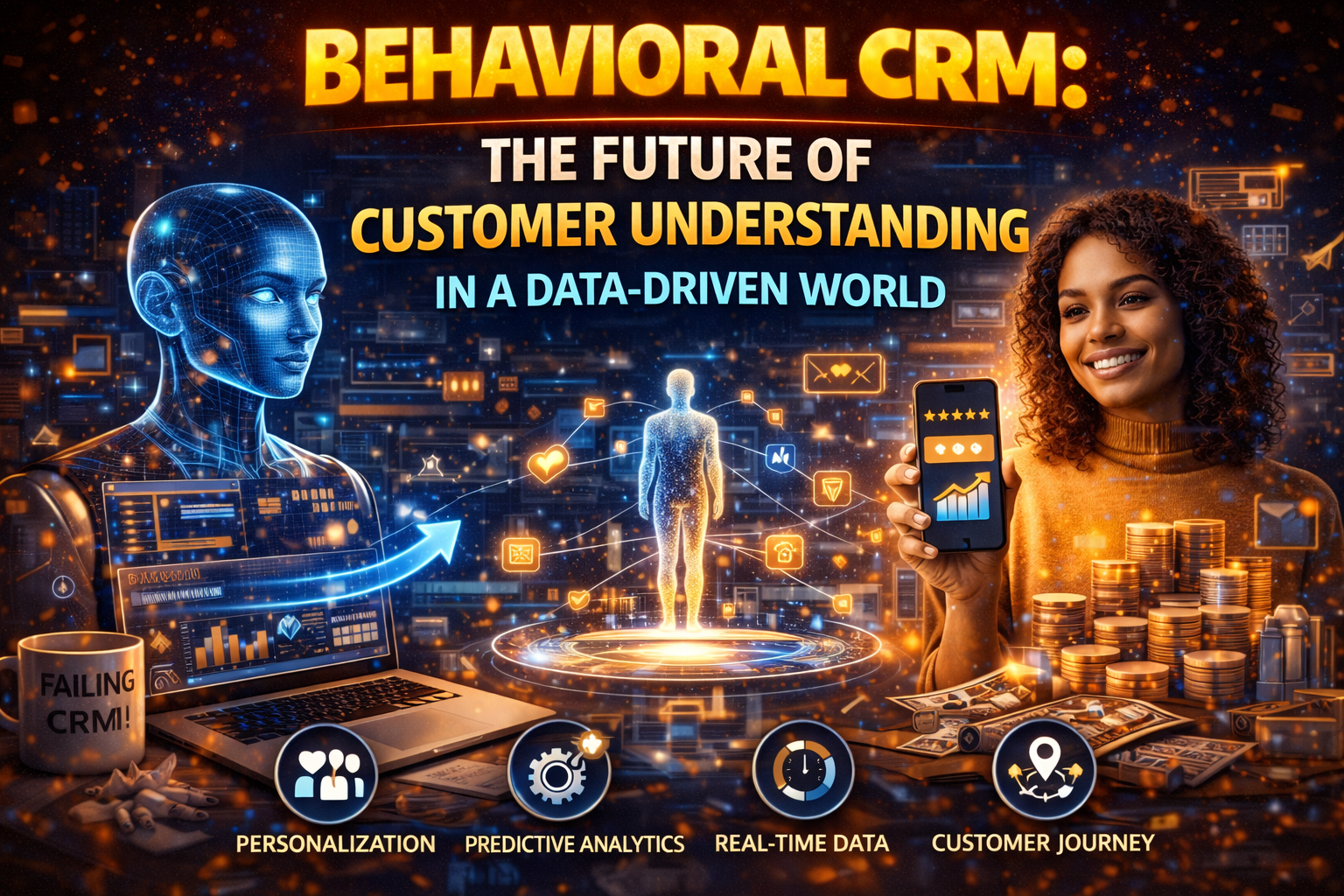
Discover how Behavioral CRM is transforming customer understanding through data, AI, and personalization. Learn strategies, benefits, and future trends shaping global businesses.
Table of Contents
Introduction
In today’s hyper-connected digital landscape, understanding your customer is no longer optional—it’s a competitive necessity. Traditional CRM systems focused on storing customer data and tracking interactions. But modern businesses need something deeper: insight into why customers behave the way they do.
This is where Behavioral CRM comes in.
Behavioral CRM goes beyond basic data management. It analyzes customer actions, preferences, and patterns to deliver highly personalized experiences and predict future behavior. In 2026 and beyond, it is becoming one of the most powerful tools for businesses aiming to build meaningful, long-term relationships.
In this blog, we’ll explore what Behavioral CRM is, why it matters, and how it is shaping the future of customer understanding globally.
What is Behavioral CRM?
Behavioral CRM is an advanced approach to customer relationship management that focuses on analyzing customer behavior rather than just storing static data.
It uses:
- Browsing patterns
- Purchase history
- Engagement behavior
- Interaction frequency
to understand customer intent and preferences.
👉 Learn more about CRM fundamentals:
https://www.salesforce.com/crm/what-is-crm/
👉 Explore behavioral analytics:
https://www.ibm.com/topics/behavioral-analytics
Unlike traditional CRM, which answers “who is the customer?”, Behavioral CRM answers:
- What does the customer want?
- When will they act?
- Why are they engaging (or disengaging)?
Why Behavioral CRM Matters Today
Modern customers expect:
- Personalized experiences
- Instant responses
- Relevant recommendations
Businesses that fail to meet these expectations risk losing customers to competitors.
Behavioral CRM helps companies:
- Understand customer intent
- Predict future actions
- Deliver timely and relevant engagement
👉 Learn about customer expectations:
https://www.mckinsey.com/capabilities/growth-marketing-and-sales/our-insights
How Behavioral CRM Works
Behavioral CRM combines multiple technologies and processes:
Data Collection
It gathers data from various touchpoints such as:
- Websites
- Mobile apps
- Emails
- Social media
Behavior Analysis
AI and analytics tools identify patterns such as:
- Frequent visits
- Abandoned carts
- Content preferences
Segmentation
Customers are grouped based on behavior, not just demographics.
Action Triggers
The system automatically triggers actions like:
- Sending personalized emails
- Offering discounts
- Recommending products
Continuous Learning
Machine learning improves predictions over time.
👉 Learn about machine learning basics:
https://cloud.google.com/learn/what-is-machine-learning
Key Benefits of Behavioral CRM
Deeper Customer Insights
Behavioral CRM provides a detailed understanding of customer preferences and motivations.
Personalized Customer Experiences
Businesses can deliver tailored experiences that resonate with individual users.
Improved Customer Retention
By understanding behavior, companies can proactively address churn risks.
Higher Conversion Rates
Targeted messaging increases the likelihood of conversions.
Smarter Decision-Making
Data-driven insights help businesses make better strategic decisions.
👉 Learn about data-driven strategies:
https://analytics.google.com/
Real-World Applications of Behavioral CRM
E-commerce Personalization
Online stores use Behavioral CRM to:
- Recommend products
- Send cart reminders
- Offer personalized discounts
Content and Media Platforms
Behavioral CRM helps:
- Recommend content
- Increase user engagement
- Retain subscribers
SaaS and Digital Products
Companies analyze user behavior to:
- Improve onboarding
- Reduce churn
- Enhance user experience
Healthcare and Wellness
Behavioral CRM supports:
- Personalized care plans
- Health reminders
- Patient engagement
Technologies Powering Behavioral CRM
Artificial Intelligence (AI)
AI enables systems to predict behavior and automate actions.
Machine Learning (ML)
ML continuously improves accuracy based on new data.
Big Data Analytics
Processes large volumes of behavioral data.
Customer Data Platforms (CDPs)
Unify data from multiple sources.
👉 Learn about CDPs:
https://www.tealium.com/what-is-a-cdp/
Real-Time Analytics
Allows instant response to customer actions.
👉 Explore real-time analytics:
https://cloud.google.com/solutions/real-time-analytics
Challenges of Behavioral CRM
While powerful, Behavioral CRM comes with challenges:
Data Privacy Concerns
Collecting behavioral data raises privacy issues.
👉 Learn about data privacy:
https://gdpr.eu/what-is-gdpr/
Data Overload
Too much data can be overwhelming without proper analysis.
Integration Complexity
Combining data from multiple sources can be difficult.
High Implementation Costs
Advanced systems may require significant investment.
Future of Behavioral CRM
The future of Behavioral CRM is incredibly promising.
Predictive and Autonomous CRM
Systems will not only predict behavior but act on it automatically.
Emotion-Based Analytics
Understanding emotions through voice and text analysis.
Hyper-Personalization
Delivering one-to-one experiences at scale.
Privacy-First CRM
Balancing personalization with data protection.
How Businesses Can Get Started
To implement Behavioral CRM effectively:
- Start with clean and structured data
- Use AI-powered CRM tools
- Focus on key customer behaviors
- Maintain transparency and trust
- Continuously optimize strategies
Conclusion
Behavioral CRM represents the next evolution of customer relationship management.
It shifts the focus from:
- Static data → Dynamic behavior
- Reactive actions → Predictive engagement
- Generic messaging → Personalized experiences
In a world where customer expectations are constantly rising, businesses that understand behavior will outperform those that don’t.
The future of CRM is not just about managing customers—it’s about truly understanding them.
Discover why CRM Software fails in most companies and learn how to avoid common mistakes. Improve adoption, strategy, and ROI with smarter CRM implementation.
