
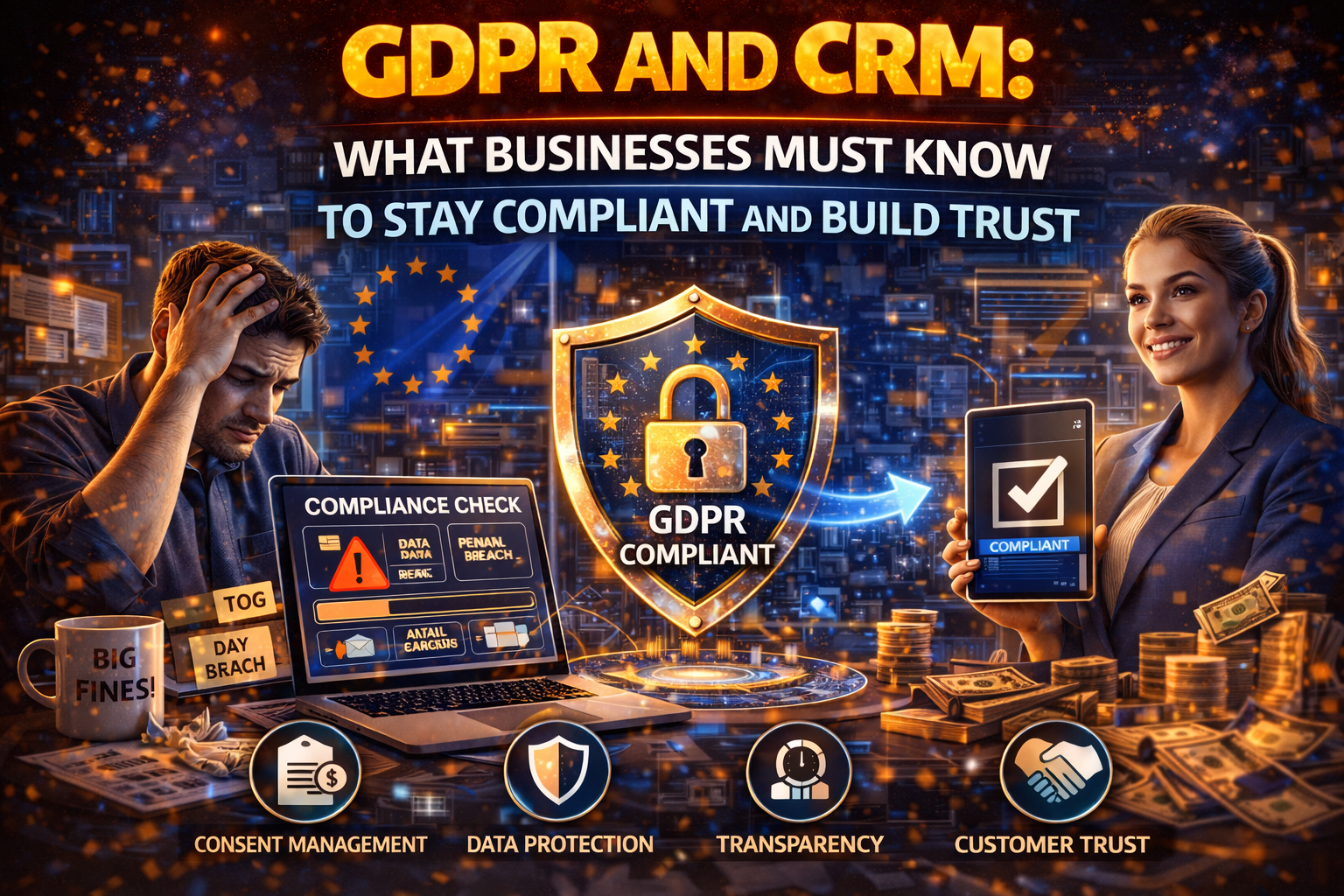
Learn everything about GDPR and CRM, including key compliance rules, common mistakes, and best practices to protect customer data and build trust in 2026.
Table of Contents
Introduction
In the digital economy, data is one of the most valuable assets a business can have. Customer Relationship Management (CRM) systems sit at the center of this data ecosystem, storing and managing sensitive customer information.
But with great data comes great responsibility.
The introduction of global data protection laws—especially the General Data Protection Regulation (GDPR)—has transformed how businesses handle customer data. This makes understanding GDPR and CRM essential for any organization that wants to operate ethically and legally.
In this blog, we’ll break down what GDPR means for CRM systems, the key compliance requirements, common mistakes, and how businesses can stay on the right side of the law.
What is GDPR and Why It Matters for CRM
The General Data Protection Regulation (GDPR) is a comprehensive data protection law designed to give individuals greater control over their personal data.
👉 Learn more about GDPR:
https://gdpr.eu/what-is-gdpr/
CRM systems typically store:
- Names and contact details
- Communication history
- Purchase behavior
- Preferences and interactions
This means CRM platforms are directly impacted by GDPR requirements.
👉 Learn about CRM basics:
https://www.salesforce.com/crm/what-is-crm/
Why GDPR and CRM Are Closely Connected
CRM systems rely on collecting and analyzing customer data. GDPR regulates how this data is:
- Collected
- Stored
- Processed
- Shared
Failure to comply can result in:
- Heavy fines
- Legal consequences
- Loss of customer trust
👉 Explore global privacy frameworks:
https://www.oecd.org/privacy/
Key GDPR Principles Every CRM Must Follow
Lawful, Fair, and Transparent Processing
Businesses must clearly explain:
- What data is collected
- Why it is collected
- How it will be used
Transparency builds trust and ensures compliance.
Purpose Limitation
Data should only be used for specific, legitimate purposes.
Example:
If a customer shares their email for a purchase, it cannot automatically be used for marketing without consent.
Data Minimization
Only collect data that is necessary.
👉 Learn about data minimization:
https://ico.org.uk/for-organisations/guide-to-data-protection/
Collecting excessive data increases risk.
Accuracy
CRM data must be accurate and up to date.
Storage Limitation
Data should not be stored longer than necessary.
Integrity and Confidentiality
Data must be protected using strong security measures.
👉 Learn about cybersecurity:
https://www.cisa.gov/cybersecurity
Key GDPR Rights That Affect CRM Systems
GDPR gives individuals several rights that directly impact CRM usage:
Right to Access
Customers can request access to their data.
Right to Rectification
They can correct inaccurate information.
Right to Erasure (Right to be Forgotten)
Customers can request deletion of their data.
👉 Learn more about GDPR rights:
https://gdpr.eu/gdpr-rights/
Right to Data Portability
Users can transfer their data to another service.
Right to Object
Customers can object to data processing, especially for marketing.
Common GDPR Mistakes in CRM
Lack of Proper Consent
Using customer data without explicit consent is a major violation.
Fix: Use clear opt-in mechanisms.
Poor Data Security
Weak security increases the risk of breaches.
Fix: Implement encryption, access controls, and regular audits.
Unclear Privacy Policies
Vague or complex policies confuse users.
Fix: Use simple, transparent language.
Ignoring Data Requests
Failing to respond to user requests can lead to penalties.
Fix: Set up processes to handle requests efficiently.
Over-Retention of Data
Keeping data longer than necessary is non-compliant.
Fix: Define clear data retention policies.
Best Practices for GDPR-Compliant CRM
Implement Consent Management
Track and store user consent within your CRM.
Use Secure CRM Platforms
Choose CRM systems with built-in compliance features.
👉 Explore CRM platforms:
https://www.hubspot.com/products/crm
Audit Your Data Regularly
Identify and remove unnecessary or outdated data.
Train Your Team
Ensure employees understand GDPR requirements.
Monitor Third-Party Integrations
Ensure all integrated tools comply with GDPR.
Create a Data Breach Response Plan
Be prepared to act quickly in case of incidents.
👉 Learn about incident response:
https://www.sans.org/white-papers/incident-response/
Benefits of GDPR Compliance in CRM
Compliance is not just about avoiding penalties—it offers real business benefits:
Builds Customer Trust
Transparent data practices increase confidence.
Improves Data Quality
Better data leads to better decisions.
Enhances Brand Reputation
Compliance shows professionalism and responsibility.
Reduces Risk
Minimizes legal and financial exposure.
Future of GDPR and CRM
The future of CRM will be shaped by:
Privacy-First CRM Systems
Systems designed with compliance as a core feature.
AI and Ethical Data Usage
Balancing automation with responsible data handling.
Global Data Regulations
More countries introducing GDPR-like laws.
Customer-Controlled Data
Users gaining more control over their personal information.
Conclusion
Understanding GDPR and CRM is no longer optional—it’s essential for modern businesses.
CRM systems are powerful tools, but they must be used responsibly. By following GDPR principles and best practices, businesses can:
- Protect customer data
- Build trust
- Avoid legal risks
- Create sustainable growth
In a world where data privacy is becoming a top priority, compliance is not just a legal requirement—it’s a competitive advantage.
Discover how Behavioral CRM is transforming customer understanding through data, AI, and personalization. Learn strategies, benefits, and future trends shaping global businesses.
